Renewable energy landscape with wind turbines and solar panels
Clean Technology

Powering a
Sustainable Future

Renewable energy is transforming how we power our world — cleaner, cheaper, and more resilient than ever before. Explore the technologies, the impact, and how you can be part of the transition.

0GW Global Capacity
0M+ Green Jobs
$0B Annual Investment

Explore the Future

What Is Renewable Energy?

Renewable energy comes from sources that are naturally replenished on a human timescale — sunlight, wind, water, geothermal heat, and organic matter. Unlike fossil fuels, these sources produce little to no greenhouse gas emissions during operation.

The transition to renewable energy is one of the defining challenges and opportunities of our era. As climate change accelerates, the urgency to decarbonize our energy systems has never been greater. Fortunately, the economics of renewable energy have shifted dramatically — solar and wind are now the cheapest sources of new electricity generation in most of the world.

In 2024, renewables accounted for over 30% of global electricity generation for the first time in history. This milestone reflects decades of innovation, investment, and policy action across nations. The International Energy Agency (IEA) projects renewables will surpass coal as the world's largest source of electricity by 2027.

Global Momentum

Over 170 countries have set renewable energy targets. The Paris Agreement has galvanized a worldwide shift toward decarbonization.

Plummeting Costs

Solar PV costs have dropped by 90% since 2010. Onshore wind costs have fallen 70%. Renewables now undercut fossil fuels in most markets.

Record Growth

In 2024, the world added a record 560 GW of renewable capacity — more than the total power capacity of the European Union.

Types of Renewable Energy

Each renewable source plays a unique role in the global energy mix, with distinct strengths and applications.

Icons representing solar, wind, hydroelectric, geothermal, and biomass energy

Solar Energy

1,400+ GW Global Installed Capacity

Solar photovoltaic (PV) technology converts sunlight directly into electricity using semiconductor cells. It's the fastest-growing energy source, with costs dropping 90% in the last decade. Utility-scale solar farms now generate electricity at $20–40/MWh — cheaper than new coal or gas plants.

  • Earth receives enough solar energy in one hour to power the world for a year
  • China added 290 GW of solar capacity in 2024 alone
  • Rooftop solar gives households energy independence

Wind Energy

1,000+ GW Global Installed Capacity

Wind turbines convert kinetic energy from air currents into electricity. Onshore wind is one of the cheapest power sources available. Offshore wind, while more expensive, offers stronger, more consistent winds and can be sited near coastal demand centers.

  • Modern turbines reach 260m tall with blade spans over 220m
  • A single offshore turbine can power 16,000 homes
  • Wind supplied 10% of global electricity in 2024

Hydroelectric Power

1,400+ GW Global Installed Capacity

Hydropower harnesses the energy of flowing or falling water, typically through dams. It is the largest source of renewable electricity globally and provides critical grid stability. Pumped-storage hydro also serves as the world's largest form of energy storage.

  • Hydropower provides 15% of the world's electricity
  • Pumped-storage hydro accounts for 94% of global grid storage
  • Run-of-river systems minimize ecological impact

Geothermal Energy

16 GW Global Installed Capacity

Geothermal energy taps heat stored beneath Earth's surface. It provides baseload power with a tiny land footprint and near-zero emissions. New enhanced geothermal systems (EGS) are expanding the technology beyond volcanic regions to virtually anywhere on Earth.

  • Iceland generates 66% of its energy from geothermal
  • Geothermal plants have 90%+ capacity factors — the highest of any energy source
  • Enhanced systems could unlock 100x more geothermal potential

Biomass Energy

150+ GW Global Installed Capacity

Biomass energy converts organic materials — agricultural waste, wood, dedicated energy crops — into heat, electricity, or biofuels. When sourced sustainably, it can be carbon-neutral. Modern biogas systems also capture methane from waste, turning a potent greenhouse gas into useful energy.

  • Biofuels provide ~3% of global transport fuel
  • Biogas from agricultural waste powers millions of rural homes
  • Sustainable biomass supports waste-to-energy circular economy

Global Impact & Growth

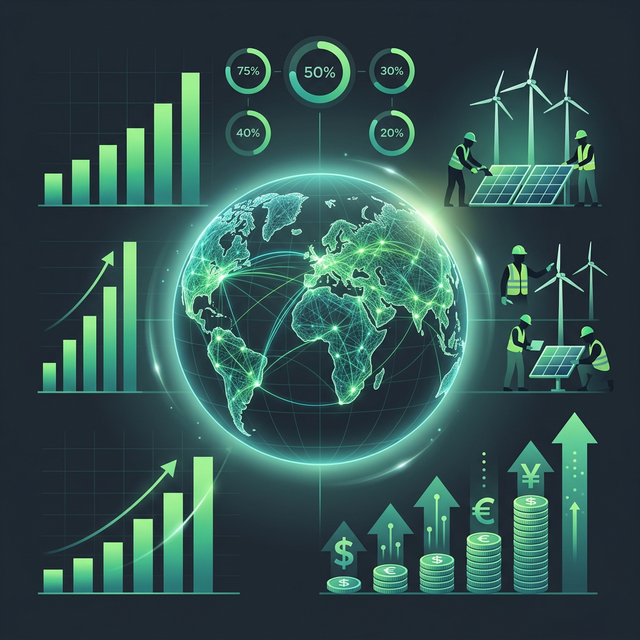
Global renewable energy impact infographic with data visualizations
30%

Electricity Share

Renewables now provide 30% of global electricity, up from 20% a decade ago.

70%

New Capacity

70% of all new power generation capacity added globally in 2024 was renewable.

90%

Cost Reduction

Solar PV module costs have fallen 90% since 2010, accelerating adoption worldwide.

Leading the Charge: Regional Capacity (GW)

Asia Pacific
1,850 GW
Europe
780 GW
North America
580 GW
South America
320 GW
Africa
65 GW

The Benefits of Going Renewable

Environmental Protection

Renewable energy produces little to no direct greenhouse gas emissions. Replacing fossil fuels with clean energy is the single most impactful action to limit global warming to 1.5°C. Every 1 GW of solar installed avoids ~1.5 million tons of CO₂ per year.

Climate

Economic Growth

The renewable energy sector employs over 14 million people globally and is growing rapidly. Clean energy investment reached $495 billion in 2024 — creating jobs, boosting local economies, and providing stable, low-cost electricity for businesses and households.

Economy

Public Health

Air pollution from fossil fuels causes 4.2 million premature deaths annually. Transitioning to clean energy dramatically improves air quality, reducing respiratory disease, cardiac illness, and cancer rates — especially in urban and industrial areas.

Health

Energy Independence

Renewable energy can be generated locally, reducing dependence on imported fuels and volatile global commodity markets. Distributed solar and wind give communities, businesses, and nations greater energy sovereignty and resilience.

Security

Water Conservation

Fossil fuel and nuclear plants consume enormous quantities of water for cooling. Solar PV and wind require virtually no water to generate electricity, conserving a precious resource as freshwater scarcity intensifies globally.

Resources

Social Equity

Decentralized renewable energy brings electricity to the 770 million people who still lack access. Off-grid solar, mini-grids, and community energy projects empower underserved populations, enabling education, healthcare, and economic opportunity.

Equity

Innovation & Emerging Technologies

The energy transition is accelerating. Breakthroughs in materials science, engineering, and AI are unlocking the next generation of clean energy technologies.

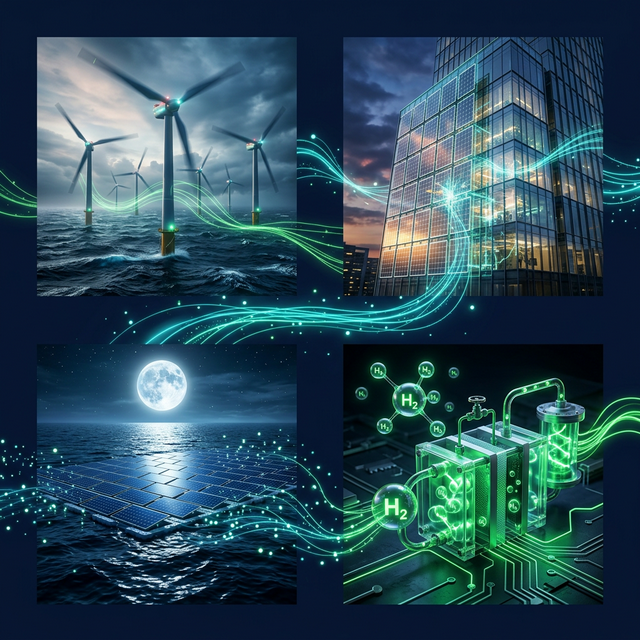
Emerging renewable energy technologies including offshore wind, floating solar, and green hydrogen
01

Perovskite Solar Cells

A revolutionary material that can be printed onto flexible surfaces at a fraction of the cost of silicon. Perovskite-silicon tandem cells have achieved >33% efficiency in the lab — far exceeding conventional panels. Commercial deployment is expected by 2026–2028.

02

Green Hydrogen

Produced by splitting water using renewable electricity, green hydrogen can decarbonize sectors that are difficult to electrify: heavy industry, shipping, aviation, and long-duration energy storage. Global electrolyzer capacity is scaling rapidly.

03

Floating Offshore Wind

Floating platforms unlock deepwater wind resources previously inaccessible with fixed-bottom turbines. This vastly expands the areas suitable for offshore wind, especially in the Pacific, Mediterranean, and Atlantic — where the strongest winds blow.

04

Next-Gen Battery Storage

Solid-state batteries, iron-air batteries, and flow batteries are pushing energy storage beyond lithium-ion limitations. These technologies promise longer duration, lower cost, and safer grid-scale storage — solving renewables' intermittency challenge.

05

AI-Optimized Grids

Machine learning is transforming grid management — predicting renewable output, balancing supply and demand in real time, and optimizing battery dispatch. AI can increase renewable integration by up to 20% without new infrastructure.

How You Can Help

The clean energy transition needs everyone. Here's how individuals and businesses can accelerate the shift to a sustainable energy future.

For Individuals

  • Install rooftop solar

    With tax credits and falling costs, residential solar pays for itself in 5–8 years and provides decades of clean electricity.

  • Switch to a green energy provider

    Many utilities offer 100% renewable electricity plans. Community solar programs provide access even without a suitable roof.

  • Electrify your home

    Heat pumps, induction stoves, and electric vehicles cut emissions when paired with renewable electricity. Heat pumps are 3–5x more efficient than gas furnaces.

  • Improve energy efficiency

    Insulation, LED lighting, smart thermostats, and efficient appliances can cut home energy use by 20–40%, reducing costs and carbon footprint.

  • Advocate for clean energy policy

    Contact elected officials, support renewable energy legislation, and vote for candidates committed to climate action.

For Businesses

  • Sign a renewable power purchase agreement

    Corporate PPAs lock in long-term clean energy at stable prices. Over 40 GW of corporate PPAs were signed in 2024 alone.

  • Set science-based targets

    Join the 4,000+ companies committed to science-based emissions reductions aligned with the Paris Agreement.

  • Invest in on-site generation

    Commercial rooftop solar, parking canopy solar, and on-site battery storage reduce electricity costs and demonstrate environmental commitment.

  • Electrify vehicle fleets

    Electric vehicles reduce fuel and maintenance costs by 40–60%. Fleet electrification paired with workplace charging powered by renewables multiplies impact.

  • Disclose and reduce supply chain emissions

    Scope 3 emissions often represent 70%+ of a company's carbon footprint. Transparent reporting drives accountability and action.